
Most founders running a $2 million to $10 million business think of their bank as a box to tick: apply, wait, get approved or declined. The founders who get the best terms treat it as a relationship they actively manage.
Here's what separates the two.
1. Build the relationship before you need funding
The businesses that get faster approvals and better terms aren't the ones scrambling under cash flow pressure. They're the ones who stayed visible, communicated regularly, and never let their bank get surprised.
No surprises is the whole game. Banks tolerate bad news far better than they tolerate finding out about it late.
2. Know your Relationship Manager as a person, not a contact
Understand how your bank is structured. Build connections beyond frontline staff. Engage consistently, not only when you're chasing money. Ask your RM directly what a strong application looks like internally and why deals get declined.
3. Communicate early and often
Keep your banker updated on staff growth, contract wins, expansion plans, margin pressure, and leadership changes. Hold structured annual or quarterly reviews covering performance, forecasts, and risk. Businesses that talk to their bank between requests get treated differently than ones that only show up asking for something.
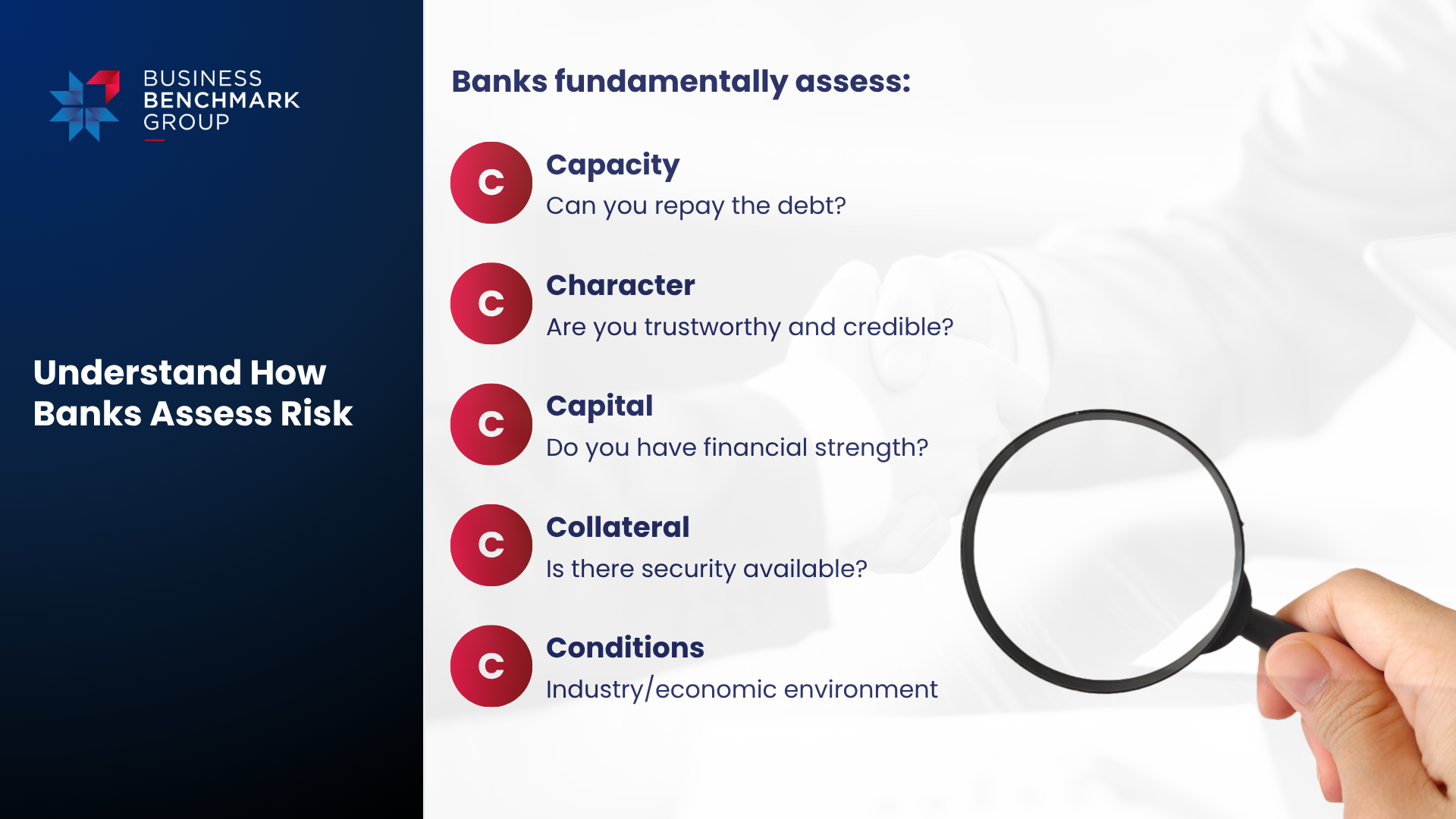
4. Understand the five things banks really assess
Capacity: can you repay the debt?
Character: are you trustworthy?
Capital: do you have financial strength?
Collateral: is there security available?
Conditions: what does your industry and the economy look like?
Every conversation with your bank runs through this filter, whether you notice it or not.
5. Prepare professionally before you ask for anything
Know why you need funding, how much, what it's for, the expected return, and your repayment strategy before you walk in. Incomplete or reactive applications are one of the biggest mistakes SME owners make, and banks notice immediately.
6. Bring quality financial information, not just numbers
Two to three years of financial statements, current management accounts, a 12-month cashflow forecast, and clear operational detail: debtors, creditors, pipeline, key contracts, customer concentration. This is what separates a founder who's prepared from one who's guessing.
7. Cashflow beats profit, every time
Banks lend against cashflow, serviceability, and consistency of earnings, not your profit line. Plenty of profitable businesses collapse from cashflow mismanagement. Know your cash conversion cycle. Forecast weekly or monthly, not just at month end.
8. Clean up the red flags before they pile up
Overdrawn accounts, tax debt, returned payments, unpaid superannuation, director loan issues, late reporting: banks quietly track all of it. Every one is fixable, and every one either builds or erodes your credibility long before you ask for anything.
9. Build credibility before you need the money
Never approach your bank for the first time during a crisis. Bad news delivered early creates more options and more trust. Bad news hidden destroys both. The best time to build a strong banking relationship is before you need it, not after.
10. Get "bank ready" before the opportunity shows up
The founders who move fastest on acquisitions, property, or growth opportunities are the ones already prepared: current financials, updated forecasts, clean structures, strong governance. Opportunity doesn't wait for you to get organised, and neither should your bank relationship.
Banks don't just fund businesses. They fund confidence, clarity, and trust. Build that early, and the flexibility, speed, and terms tend to follow.